
Search for mold testing in Huntsville and you will find plenty of offers to sample your air. Before you pay for one, it helps to know what the two agencies homeowners here are most likely to rely on actually say about testing: the U.S. Environmental Protection Agency (EPA) and the Alabama Department of Public Health (ADPH). Their answer is more cautious than most ads. This guide explains when testing is usually unnecessary, when an inspection or a test can still be useful, and how to avoid paying for results that will not change what you do next.
What the EPA says about mold testing
The EPA's A Brief Guide to Mold, Moisture and Your Home is direct: "In most cases, if visible mold growth is present, sampling is unnecessary." It also notes that "No EPA or other federal limits have been set for mold or mold spores." With no federal limit to compare against, a lab number on its own cannot tell you that your home has passed or failed.
The EPA's focus is on moisture instead: "If you clean up the mold, but don't fix the water problem, then, most likely, the mold problem will come back."
What ADPH says
ADPH's Mold Facts page goes further: "Testing for molds is not recommended." Its reason: "Reliable sampling for mold can be expensive and unreliable, with results that may be inconclusive." ADPH also says there are currently no Alabama laws on mold standards or testing requirements, and no state accreditation for companies that test for mold. So a test result in Alabama is not measured against any state standard either. (Our Alabama mold law guide covers the licensing side.)
So, do you need mold testing?
For most homeowners, probably not. Here is a simple way to think about it:
- You can see mold. Testing usually adds little. The next step is finding the moisture source and deciding on cleanup. The EPA says areas under about 10 square feet can usually be handled by a homeowner.
- You smell mustiness but cannot see growth. A moisture-focused inspection, looking for leaks, damp materials and humidity, is often more useful than an air sample.
- You have had water damage. Drying fast matters more than testing. EPA says to dry water-damaged areas "within 24-48 hours to prevent mold growth."
- Remediation has just been finished. Some homeowners choose a post-remediation check to confirm the work area is clean and dry before walls are closed up.
Mold inspection vs. mold testing
These terms get used interchangeably, but they are different things:
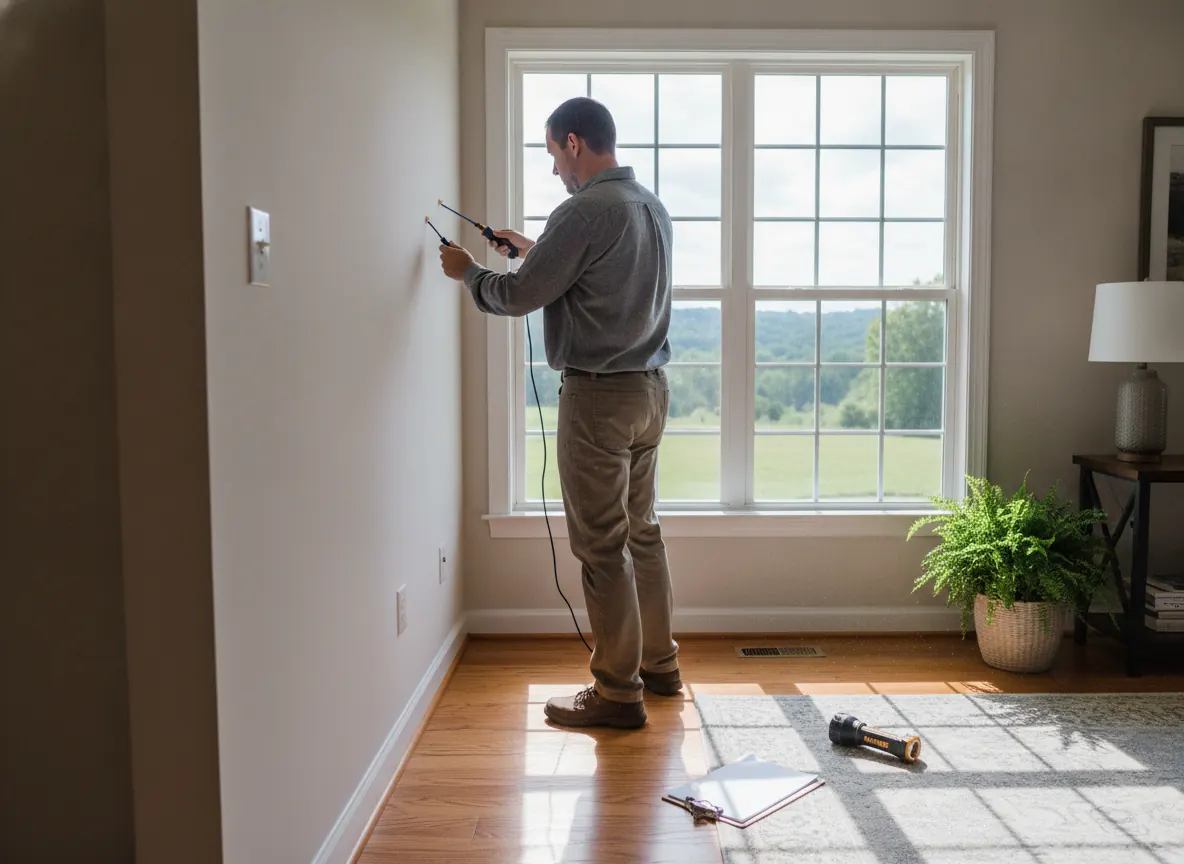
- Inspection is a visual and moisture assessment. An inspector typically looks at likely problem areas (crawl space, attic, bathrooms, around windows and the HVAC system) and uses tools such as moisture meters to find wet materials. The useful output is an answer to "where is the water coming from, and what is affected?"
- Testing (sampling) means collecting air or surface samples and sending them to a lab. It tells you about spores or growth at that moment, in those spots. It does not by itself locate a leak.
Our mold inspection and testing page explains what a typical visit looks like.
Do mold remediation companies test for mold?
Some do and some do not. Fixr notes that "Most companies do not test for mold." When the same company both tests and quotes the cleanup, it is reasonable to ask how the test results connect to the scope of work. Some homeowners prefer a separate company for any testing so the person measuring the problem is not also selling the fix. That is a choice, not a rule, and nothing in Alabama law requires it.
What testing typically costs
These are typical national ranges from This Old House (2026), Fixr (2025) and Bob Vila (2024) — estimates, not quotes.
| Item | Typical range |
|---|---|
| Mold inspection | $450–$800 (Bob Vila: $299–$1,014, avg about $656) |
| Air sample testing | $250–$350 |
| Mold remediation, typical job | $1,200–$3,750 (This Old House avg about $2,300); Fixr $1,500–$9,000, avg about $3,500 |
An inspection plus several air samples can approach the cost of a small cleanup, which is part of why it pays to ask what a test will change before you order one. More pricing detail is in the mold remediation cost guide.
Five questions to ask before paying for a test
- What decision will this test help me make?
- If the result is high or low, what would you recommend differently?
- What standard will you compare the results to? (There is no EPA or Alabama limit.)
- Will you also look for the moisture source, and is that included in the price?
- Will you be quoting the cleanup too? If so, how are the two connected?
Buying a home in the Huntsville area
Home purchases are one place where an inspection is common. With new and relocating households arriving, including U.S. Space Command, which opened its first operational facility at Redstone Arsenal in April 2026 and expects more than 200 employees by the end of 2026, many buyers are touring homes they have never seen in a humid climate. Realtors have reported relocations to Hazel Green, Meridianville and South Huntsville.
For a purchase, a moisture-focused inspection of the crawl space, attic and basement areas often tells you more than an air sample. Alabama generally follows "buyer beware" for used homes, so it pays to ask the seller directly about past water damage or mold. See buying or selling a home with mold in Alabama and crawl space mold in North Alabama. This is general information, not legal advice.
What about health concerns?
Testing your home is not a health test. ADPH notes that people with asthma, allergies or breathing conditions may be more sensitive to mold, and that those with mold allergies or asthma should not clean moldy materials themselves. If you have symptoms or health concerns, talk with your doctor, who can advise on what makes sense for you.
A sensible order of steps
Look and smell
Check the usual suspects: under sinks, around windows, the crawl space, attic and HVAC closet.
Find the water
Leaks, condensation, drainage and humidity. This is the part that prevents the mold from coming back.
Get a clear scope
Ask for written quotes that say what will be removed, cleaned and dried, and how the moisture source will be fixed.
Decide on testing last
Only if a result would change your decision, or if you want a post-remediation check.
Get inspection or remediation quotes
We connect Huntsville-area homeowners with independent local mold inspection and remediation companies for free, no-obligation quotes. Tell us what you are seeing or smelling, and whether you want an inspection, a cleanup quote or both. ADPH suggests looking for IICRC-certified firms; ask any company for its training and certifications, insurance, and an HBLB license number for rebuild work over $10,000. Request free quotes; we usually reply the same day.
Frequently asked questions
Do I need mold testing if I can see mold?
Usually not. The EPA says that in most cases, if visible mold growth is present, sampling is unnecessary, and ADPH says testing for molds is not recommended. The more useful step is finding and fixing the moisture source, then cleaning up. The EPA says areas under about 10 square feet can usually be handled by a homeowner.
Is there a safe mold level in Alabama?
No official one. The EPA says no EPA or other federal limits have been set for mold or mold spores, and ADPH says Alabama has no laws on mold standards or testing requirements. That means a lab result is not compared against any government limit, so ask any tester what standard they use and what the result would change.
How much does mold testing cost in Huntsville?
No Huntsville-specific figure is available, so use national estimates. Mold inspection typically runs $450–$800 (Fixr), or $299–$1,014 with an average around $656 (Bob Vila). Air sample testing typically runs $250–$350 (Bob Vila). These are estimates, not quotes; actual prices depend on home size and the number of samples.